The following was originally published October 30 by the Union of Orthodox Journalists (UOJ), which you can also read here. It is essentially a half-length version of my talk at the 2026 Orthodox Montanika Conference in June 2026. (The full version is in the previous post and on the articles page.) The major differences are that (1) it does not provide the 22 footnotes in the written version of my talk, (2) it does not delve into the theology or psychology of the marital relationship, but (3) it does provide (toward the end) several recommendations of online sources worth consulting for the psychology of men and women and the ideology of feminism—the hate movement rapidly destroying Western civilization.
When YouTubers Sound More Like the Fathers Than We Do
Did you know that “marriage counseling,” also known as “couples therapy,” was invented a hundred years ago by German eugenicists? It’s true. Racist, feminist eugenicists, pushing birth control. Before the 1920s, nobody thought it a good idea to sit a husband and wife down together, invite them to complain about each other, and then prod one of them, usually the husband, to change his ways to suit her. But that’s what we do today, even we Orthodox.
You’ve heard it said that “Orthodoxy is not a religion, it’s a way of life.” But when it comes to a large part of life—marriage and raising children—the Orthodox way hasn’t really differed much from the world’s way, not in the past and not at present. The problem is that the world’s way of marrying and raising children has undergone a revolution in the past hundred years, and most Orthodox have followed right along.
Many in fact celebrate this revolution. The French Orthodox scholar Jean-Claude Larchet does in his new book Renewing Gender, in which he writes that the way most Westerners now live is the way Orthodox Christians should live because “social structures have evolved” and a “strong egalitarian mentality” has taken hold.
Larchet is wrong about many things in his book, but he is right that a “strong egalitarian mentality” has taken hold of most Westerners, including most Orthodox. Most of us raise our girls very much like our boys. We may dress them a little differently, but we send them to the same schools to learn the same things, push them to compete in the same sports and to aspire to the same careers, and expect them to do all the things that men do in life, while also marrying and raising children.
About the only thing we tell our girls they can’t do is serve in the altar, but we have a hard time explaining why, and the push is on for altar girls and deaconesses. Many priests are already churching girls through the altar, turning an opportunity to teach the difference of male and female into an opportunity to deny the difference.
As for our boys, we raise them to do all the things men have always done—except exercise any real authority over women. We expect men to treat women as equals, to let women rule over them, to compete against women for jobs, to work full-time to support their families, to help out more at home, and to do everything possible to make their wives happy.
And all this is assumed to simply be the modern way of life, and it certainly is the modern way because it has taken hold only in the late twentieth century. It is the boomer way of life, which means that it must be wrong, right?
The Great Feminization
Larchet is a boomer, and that explains his assumption that the way we live now is the only way we can live. Most boomers assume the same. I am also a boomer, but fifty years ago I read a book called Sexual Suicide by best-selling author George Gilder, who argued that women naturally exercise tremendous social and sexual power over men and that this is good because it motivates men to build safe and prosperous communities for their wives and children. But what feminists demanded and got in the twentieth century was political and economic power—overwhelming power with which to dominate men so women could live as they pleased, unconstrained by traditional sex roles.
We’re seeing the disastrous results of that power shift now. Maybe you’ve heard of the “Great Feminization.” Maybe you have heard of Helen Andrews. Helen is a Yale graduate, a former editor of The American Conservative magazine, and the author of Boomers: How the Men and Women Who Promised Freedom Delivered Disaster. She’s also an Orthodox Christian and the stay-at-home mother of three little boys. In the past year she has become quite an Internet sensation describing the disastrous results of the dominance of women in many fields—in academia in general, especially the social sciences; in the professions such as law, medicine, and religion; and in marketing and the media.
The problem with this dominance is not individual women but women in groups—in Helen’s words, “feminine group dynamics.” A few women in a group of men might not make much difference, but when women are the majority, the focus of the group shifts to maintaining good relations within the group. When someone threatens those good relations by arguing too strongly against someone else’s ideas, the group’s reaction is to isolate the troublemaker, and that explains wokeness and the cancel culture.
Helen talked about this at an Orthodox conference in Pennsylvania in June. What I talked about on the same panel with Helen was the demographic consequences of feminism, which are just as disastrous. Marriage and birth rates are collapsing in the West because feminism has turned Western women into arrogant narcissists who think women are normal and men are childish and toxic. Feminism has taught young men to feel guilty for just being men. Boys used to be taught to take the lead with women; now they’re taught to be ashamed of taking the lead, so they keep to themselves and never learn how to relate to women in any way other than subservience.
Many young men have also been “red-pilled” by the often-bitter commentary in the online “manosphere.” They’ve heard the horror stories about men whose lives have been ruined by divorce. Divorce laws favor women, and a man can lose his children, his house, and half his income just because his wife decides she’s not happy living with him. So more and more men now see women as not worth the trouble or the risk. There’s even an acronym for this trend: MGTOW, for “Men going their own way.”
The Problem of Hypergamy
Then there’s the problem of hypergamy, meaning “marrying up.” Hypergamy cannot be blamed on feminism or any other cultural influence. It is the natural and universal preference of women for marrying someone above them. Women do not marry down unless desperate. They instinctively want a man who is not their equal but their superior—a man who is bigger, taller, stronger, older, more mature, more secure, more confident, more assertive, making more money, and higher in social status. Why? Because they want someone to take care of them better than they can take care of themselves. That’s what Daddy did. Daddy is every woman’s model of a man, because Daddy is what they grew up thinking a real man is.
By the way, when I say that hypergamy among women is “natural and universal,” I mean that absolutely: No woman wants to marry a man she knows is less than herself. Even feminists want a Chad.
Those are the facts of life—the facts of life we have not been teaching because we have been taught feminism, which insists (deceitfully) that men and women are essentially the same.
Because we have not been teaching the true facts of life, more and more of our sons and daughters will never marry. Why? Because the more educated women are, the more successful they are in their careers, and the more money they make—the less need they have for a man and the harder it is for any man to impress them. So instead of settling for a lower-status man, they’ll keep looking for Mr. Perfect until they age-out of the marriage market.
Even when our young do marry, they often marry as equal partners, both working with neither relying fully on the other for anything. The results of such modern marriages are fewer children because they interfere with the mother’s career, ill-bred children who are unhappy as adults because they weren’t much raised by their mothers, and higher rates of divorce because both the husband and the wife know that she doesn’t really need him—she can provide for herself.
The Patristic Witness
Our Orthodox ancestors understood this danger. St. John Chrysostom even tells men to marry a poor woman rather than a rich one, because a poor woman will value you more, whereas a rich one will take pride in her wealth and independence and think less of her husband for it, as modern working women indeed do (Homily 20 on Ephesians).
Church Fathers had much more to say about marriage that doesn’t fit our modern, feminist, egalitarian conception of marriage. They did not doubt that God made man male and female. Neither did they doubt that God made men and women different enough to take very different roles in life. Women were to be “keepers at home” (Titus 2:5), bearing and raising children and managing the household as “helpmates” of their husbands (Gen 2:18). Men were to take the public role on behalf of their wives and families, working outside the home to provide for their wives and children, representing the family in all civic matters, taking the lead in church, and defending the family, the community, and the country from external dangers.
St. John Chrysostom says God Himself created this division of labor to bind husbands and wives together in mutual dependence—”to her entrusting the house, and to him the market; to him the work of feeding, for he tills the ground; to her that of clothing, for loom and distaff are the woman’s. For it is God Himself who gave to woman-kind skill in woven work” (Homily 34 on 1 Corinthians).
It should go without saying but must indeed be said, owing to the influence of feminism among us, that all Church Fathers expected the husband to exercise real authority over his wife such that he could command (if he needed to) and she would obey. The sayings in support of this are many in both Scripture and the Fathers, for, “With us, indeed, the woman is reasonably subjected to the man, for equality of honor causeth contention,” says Chrysostom (Homily 26 on 1 Corinthians).
The family is not a democracy but a monarchy, says Chrysostom, who also likens the family to an army, with the husband as the commander-in-chief and the wife as his lieutenant commander—his chief subordinate charged with seeing that all other subordinates do his will, charged also with setting the example of reverent obedience to the commander-in-chief (Homily 34 on 1 Corinthians).
Chrysostom also says the wife should “fear” her husband, not just “respect” him. Respect is a rather weak word, meaning merely to treat someone as they ought to be treated. Well, then, everyone deserves respect, in the sense that everyone deserves not to be abused. That’s how most people now understand Ephesians 5:33. Most people now read feminized Bibles, saying, “Let the wife see that she respects her husband.” That’s the Orthodox Study Bible and most modern translations. The King James at least says “reverence her husband” because the Greek of Ephesians 5:33 says phobētai—“fear, stand in awe of.”
Chrysostom is quite clear that the Apostle Paul means “fear” and not just “respect,” explaining that he doesn’t mean fear of physical harm, which he emphatically condemns, but fear of disobeying her divinely appointed “head,” for such disobedience is a serious sin, an act of infidelity to both her head and her husband’s head, which is Christ (Homily 26 on 1 Corinthians).
A Fundamental Unfairness
Hardly anyone teaches this now. Some Orthodox priests teach exactly the opposite. I recently attended an Orthodox wedding (not in my own jurisdiction) in which the priest, in his homily after the Crowning, told the couple and all those present that what they heard in the Epistle about the wife submitting and the husband loving was “just two ways of saying the same thing,” nothing more. He did not elaborate, but the implication is obvious: there’s no difference between husbands and wives.
Many priests today will say something equally modern and anti-patristic, yet when a marriage falters the same priests will lecture the husband that he’s not doing his job, faulting him for not leading, stressing his responsibility to love his wife per Ephesians 5 while saying little or nothing about the wife’s responsibility to respect him as her “head.”
It is fundamentally unfair to blame men for not leading when women have been raised to not follow. For the man to lead, the woman needs to believe that she must follow her husband as her head, even when he doesn’t act like it. No man—no matter how saintly, no matter how loving, no matter how good a leader he is—can succeed as the “head” of a woman who does not recognize him as her head.
This is true of all heads. A king can only be the king when people hail him as the king. That’s the reason for saying, “Long live the king!”—to declare your acceptance of a king. Likewise, the father of the Prodigal Son can only again be a father to the Prodigal when the Prodigal returns and submits himself to his father. It’s the same with spiritual fathers. You can’t be a spiritual father to someone who doesn’t turn to you for guidance and ask for your blessing.
The offer of a relationship by a head does not itself constitute a relationship; there must be an acceptance of the offer for the relationship to begin. Women and girls need to be taught to accept their husband’s or father’s headship—to revere not just respect their heads—to submit, to obey when required, to not talk back, to not complain, to practice modesty not just in dress but also in behavior, to know their place and not begrudge the man his place.
Many online influencers can help with this. Quite a few of them are women, and quite a few of the women are Christian. Helen Andrews, Professor Janice Fiamengo, Dr. Carrie Gress, psychiatrist Hannah Spier, and author Rachel Wilson (who is also Orthodox) all deliver devastating critiques of feminism and its ill effects on today’s women. Bloggers Laurin Ponce, Emily W. King, Karyn Seitz, Suzanne Venker, and many others offer sound, practical advice to both men and women on how to live happily together, respecting the very real natural differences in ways men and women think and feel.
Fewer male influencers speaking out online against feminism are Christian, so there are fewer to recommend. One who is Christian is Dr. David Edgington, author of White Knights and Reviling Wives. One who is not Christian but who provides (in my opinion) the most insightful commentary on the psychology behind the bad behavior of women today is Alexander Grace, a 39-year-old secular Australian husband and father. Grace and other men online are, of course, more critical of women than most (but not all) women are, but their complaint is not against all women but against “low-value women”—women corrupted by feminism, social media, and the sexual revolution.
What we need to do as Orthodox Christians is teach our daughters to be “high-value women”—not “high-status” women with degrees and careers, but “high-value” women, women worth marrying.
To raise “high-value” women, we must teach our daughters to not think only of themselves, to not think too much of themselves, to be what they were created to be, to pursue marriage instead of careers while they are young and most attractive, to do that which is most needful for civilization that only women can do, to know the great joys of motherhood and grandmotherhood, to live according to their nature and thus be “saved through childbearing,” as the Holy Apostle Paul says of women (1 Tim 2:15)—saved not by living for themselves but by living for others.
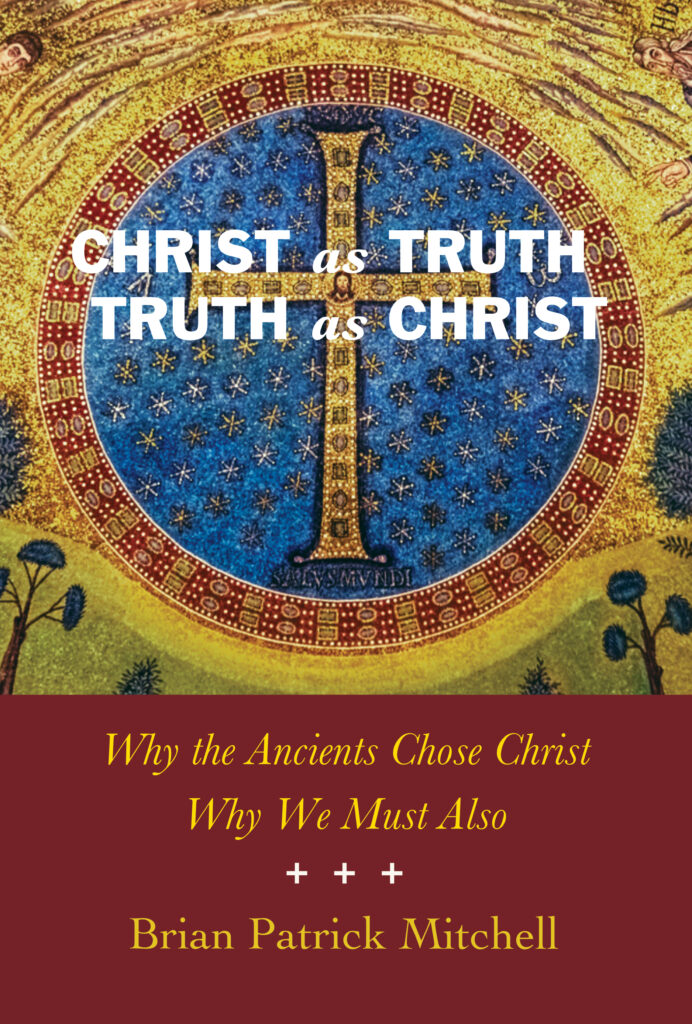
Protodeacon Brian Patrick Mitchell, PhD, is the author of eight books on politics and religions, most recently Christ as Truth, Truth as Christ (Basilian Media, 2025). This article is based on his remarks at the 2026 Orthodox Montanika Conference in Butte, MT.